
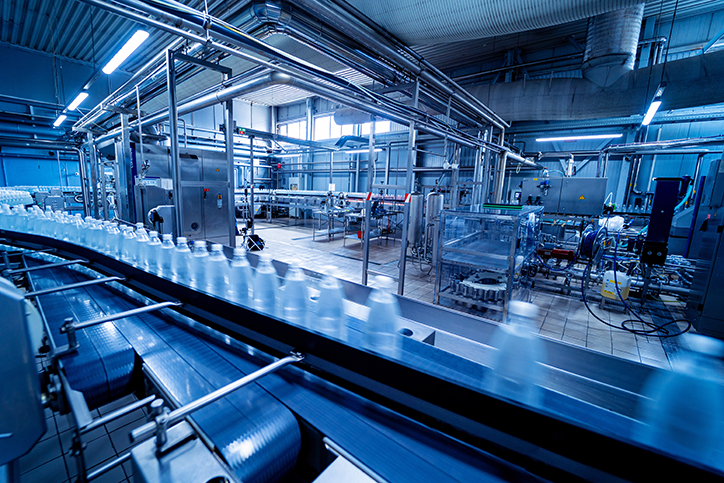

Access to automation has changed in recent years. Systems that once required enterprise budgets are now practical for mid-sized manufacturers, processors, and utilities. When people ask, “What are automation systems?” they are trying to determine how automation connects digital control logic with physical equipment. Automation systems integrate sensors, controllers, communication networks, and operator input to manage real-world processes.
This post defines what are automation systems, outlines where they deliver the most value, and identifies the technical and operational factors that determine success.
What Are Automation Systems?
What are automation systems in practical terms? They are integrated hardware and software platforms that monitor inputs, execute logic, and control outputs with minimal human intervention. A basic architecture includes sensors, programmable logic controllers or distributed control systems, human-machine interfaces, drives, actuators, and communication networks. Data flows from the field to the controller. Logic executes. Commands return to motors, valves, heaters, or robotic axes.
In industrial settings, automation systems typically fall into three categories.
- Discrete automation controls individual machines or cells. Examples include packaging lines, CNC machines, and robotic assembly stations.
- Process automation manages continuous variables, such as temperature, pressure, flow, and level. Chemical plants, food processing facilities, and water treatment plants rely on this model.
- Supervisory automation layers such as SCADA collect data across assets, provide visualization, and enable remote control.
When evaluating automation systems for your facility, focus less on labels and more on the control objectives. The system exists to hold process variables within defined limits while optimizing throughput, energy use, and safety.
Best Applications for Automation Systems
Automation systems are best suited for tasks that are highly repetitive, stable, and rule-based, such as assembly, packaging, or machine tending. In addition, processes featuring high volume, low variance, and dangerous or ergonomic risks to human workers are prime candidates, offering significant ROI through increased speed, consistency, safety, and reduced error rates.
- High-Volume Repetitive Production—Automation delivers the strongest return in repetitive, high-cycle environments. Packaging, labeling, palletizing, and machining operations benefit from consistent cycle times and reduced labor variability. In these applications, even small improvements in takt time compound across shifts. A properly tuned control system reduces scrap and stabilizes output.
- Hazardous or Regulated Environments—Facilities that handle combustible materials, high pressures, or regulated effluents rely on automation to ensure compliance and mitigate risk. Automated interlocks, alarms, and shutdown sequences reduce exposure. In water and wastewater treatment, control systems maintain chemical dosing and flow rates within regulatory thresholds. In chemical processing, distributed control systems maintain reaction stability.
- Energy Management and Utilities—Energy-intensive operations use automation to manage demand peaks, sequence large motors, and monitor power quality. In manufacturing, coordinated motor control reduces inrush current and mechanical stress. These controls extend equipment life and reduce operating costs.
- Data-Driven Operations—When organizations move beyond basic control into performance analytics, automation systems become data infrastructure. Machine states, cycle times, and downtime codes feed manufacturing execution systems and enterprise software. The result is traceability and measurable performance improvement. For teams asking what are automation systems in a digital transformation context, the answer includes structured, time-stamped process data.
Key Benefits of Automation Systems
Automation systems deliver substantial value across industries by streamlining operations and improving efficiency. The following list outlines some of the most impactful applications where automation not only increases productivity but also improves safety, quality, and cost-effectiveness. Each item highlights how different environments and tasks benefit from automated solutions.
- Productivity – Automation reduces variability in machines and equipment, improving throughput and reducing unplanned stops caused by manual adjustments.
- Quality Control – automated systems maintain process variables within defined limits, reducing scrap, which translates to lower material cost and improved margins.
- Safety – Automated processes respond rapidly to hazards and restrict access to dangerous equipment, thereby reducing risk and improving response consistency compared to manual methods.
- Cost Structure – Labor remains necessary, but automation shifts labor from repetitive tasks to oversight and problem-solving. Over time, predictable cycle times and lower rework reduce total cost per unit. Maintenance also becomes more structured when condition monitoring is integrated into the control architecture.
- Scalability – Modern automated systems support modular expansion without redesigning the entire system. This supports phased capital investment rather than single large expenditures.
Top Considerations Before Implementation
Before implementing automation systems, it’s crucial to start with a well-defined process. Automation cannot fix underlying process deficiencies; therefore, organizations must first clarify their control objectives, identify acceptable tolerances, and understand failure modes and operator interaction points. Mapping existing workflows and pinpointing sources of bottlenecks or variability ensures that automation is applied to a stable foundation, reducing the risk of costly rework later.
System architecture and integration are also central to successful automation. Selecting the right control platform requires careful consideration of input/output needs, response times, network design, and environmental factors. Early planning around cybersecurity, such as network segmentation and access controls, is essential. Integration with existing equipment and enterprise systems must be planned by confirming protocol compatibility and defining data ownership. Additionally, organizations should assess lifecycle support, considering vendor reliability, component standardization, and staff training to ensure long-term sustainability.
When evaluating what automation systems are, avoid viewing them as isolated machines. They are control frameworks that connect physical processes to measurable outcomes. The strongest implementations start with clear process objectives, select appropriate control architecture, and plan for integration and support over the full equipment lifecycle.
Trust Kasa Control for Your Automation Systems
Kasa has delivered industrial controls and automation systems since 1974, with more than 10,000 completed projects across industries such as automotive, grain handling, food processing, baggage handling, parcel automation, and data centers. Our teams deliver controls design, PLC and HMI programming, panel builds, and system integration, plus commissioning and startup support to help customers deploy reliable, maintainable automation on the plant floor.
Ready to elevate your operations with reliable, scalable automation solutions? Contact us today to discover how our expertise can help transform your processes, enhance efficiency, and drive lasting value for your business.