
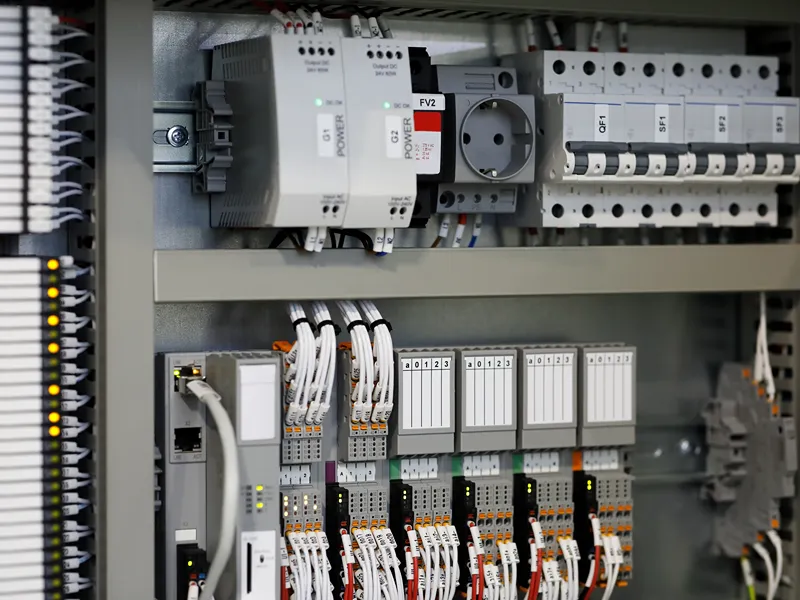

The quality of the control panel assembly affects how smoothly an automation system is installed, commissioned, and maintained. What may seem like a minor problem in the panel shop can become expensive once the equipment reaches the plant floor. For example, an incorrect terminal assignment may delay startup, or poor documentation can add hours to future troubleshooting.
Customers depend on the panel builder to follow the approved design, meet applicable requirements, and verify the finished panel before shipment. Understanding the most common quality issues can help buyers provide better project information and evaluate whether a panel builder has the right controls in place.
The Panel Does Not Match The Application
A well-built panel can still cause problems when it was designed around incomplete or inaccurate operating requirements. The builder needs to understand the incoming power, connected equipment, control architecture, installation environment, available fault current, and applicable requirements. These may include NEC provisions for industrial control panels, UL 508A construction requirements, and NFPA 79 when the panel is part of industrial machinery.
Customers can reduce this risk by involving the panel builder early in the design review before production begins. The approved electrical drawings, bill of materials, I/O list, network requirements, and installation specifications should agree before the build is released. A formal engineering review also gives the project team time to identify conflicts between customer specifications, equipment requirements, and code requirements.
Component Substitutions Can Affect The Panel’s SCCR
Component availability may change during a project, especially when a specified product has a long lead time or becomes obsolete. An alternate part may appear equivalent even though it has different electrical ratings, terminal requirements, or short-circuit ratings. A substitution can therefore affect the performance and compliance of the completed panel.
The short-circuit current rating, or SCCR, indicates the maximum available fault current the panel can safely withstand under specified conditions. NEC Article 409 requires applicable industrial control panels to be marked with an SCCR, while UL 508A Supplement SB provides a method for determining that rating. When the panel is part of industrial machinery, NFPA 79 also applies to the machine-level SCCR. It requires the rating to be adequate for the available fault current at the machine supply disconnect.
Customers should provide the available fault current at the installation location and ask the panel builder how component substitutions are reviewed. The panel builder should evaluate each alternate component within the complete circuit and document any approved changes in the final bill of materials and as-built drawings.
The Enclosure Is Unsuitable for the Installation Environment
The enclosure protects the panel components from the conditions present in the facility. Requirements vary based on whether the panel will be installed indoors, outdoors, near washdown operations, or in an area exposed to dust or corrosive materials. A general-purpose enclosure may be unsuitable even when its dimensions and component layout are correct.
NEMA enclosure type ratings define the environmental conditions an enclosure is designed to withstand when completely and properly installed. For example, Type 12 enclosures are intended for indoor use and protect against circulating dust and light water exposure. Type 4X enclosures add protection against hose-directed water and corrosion.
Customers should clearly describe the installation area during the design stage. They should also identify any unusual conditions, such as elevated ambient temperatures, chemical exposure, sanitation requirements, or outdoor placement. Early review allows the panel builder to select the enclosure, cooling method, cable entries, and external devices for the actual environment.
Layout Problems Make Installation and Maintenance Harder
An overcrowded panel may leave limited room around terminals, drives, power supplies, or communication hardware, making it more difficult for electricians to connect field wiring and for maintenance personnel to quickly trace a circuit. It can also restrict future changes when a system needs another device or I/O module.
Customers expect a panel that is organized and accessible. The panel builder should clearly identify field terminals, positioned components with appropriate working space, and wire routing so technicians can follow the circuit. Proper layout should also account for conductor termination space, wire-bending space, heat-producing components, field wiring access, and future serviceability.
Wiring Errors Appear During Commissioning
A poor or improper connection may not show up until the panel is connected to sensors, motors, valves, and other field devices. Common examples include a conductor terminated on the wrong terminal, an incorrect wire number, reversed polarity, or a missing connection. These errors create extra work because the commissioning team must determine whether the problem is with the panel, field wiring, equipment, or the control program. A documented point-to-point checkout can help isolate wiring errors before shipment. I/O verification can also confirm that panel terminals correspond to the intended inputs and outputs.
Customers should ask the panel builder what testing is included in the panel price and what will be completed during field commissioning. The answer should define the scope rather than rely on a general statement that the panel will be “tested.”
Labels and Drawings Do Not Match the Finished Panel
Clear identification affects the initial installation and every service call that follows. Wire markers, terminal numbers, device tags, and panel labels should correspond to the electrical drawings. When labels or drawings are inaccurate, technicians must trace circuits manually before they can diagnose a problem.
UL 508A requires an industrial control panel to include a complete electrical schematic for the components supplied by the manufacturer. Applicable markings include information such as the incoming electrical supply, enclosure type, and SCCR.
Any approved changes made during the control panel assembly should be reflected in the as-built drawings. The documentation package should also identify installed component models and relevant device settings when those details are part of the project scope. Accurate records shorten future maintenance work and make replacement planning easier.
Testing Confirms Too Little
Powering up the panel is only one part of verification. It does not confirm every field connection, I/O point, interlock, alarm, or operating sequence. The required test scope depends on whether the panel builder is supplying the enclosure alone, a programmed panel, or a complete controls system.
UL certification addresses the industrial control panel itself. UL states that the certification does not cover the machinery controlled by the panel or the externally connected loads. Functional testing and commissioning are therefore needed to verify how the panel works within the complete automation system.
A factory acceptance test, or FAT, can provide additional verification before the equipment reaches the site. The customer and controls team can review specified functions, confirm I/O behavior, and document any remaining work.
Choosing a Control Panel Assembly Partner
Customers should evaluate more than price and production capacity when selecting a panel builder. They should ask questions concerning engineering review, component control, applicable certifications, documentation, testing, and post-delivery support. These capabilities directly affect project risk and the amount of work that may be required during commissioning.
A quality control panel should arrive ready for its intended installation, supported by accurate documentation and a defined testing record. Choosing a panel builder that understands the full automation project helps reduce field changes and gives the maintenance team a system it can support over time.
Work with Kasa for Control Panel Assembly
Kasa Controls builds custom control panels for customers that need organized wiring, consistent panel layout, accurate labels, and reliable documentation. The team can build to customer prints or support custom panel design, with engineering review before production to help identify issues that could lead to rework, startup delays, or field troubleshooting problems.
Kasa’s in-house panel shop includes a 40,000-square-foot, environmentally controlled facility, on-site production engineering, custom labels and tags, certified wood crates, and worldwide shipping support. Its compliance and certification capabilities include UL 508A, UL 698A, NEC/NFPA 70 compliance, and NFPA 79 capability, supported by ISO 9001 quality management practices, lean processes, and 5S discipline.
If you need support with control panel assembly for a new project, a repeat build, or a larger automation program, contact Kasa Controls to discuss your requirements and request a quote.