
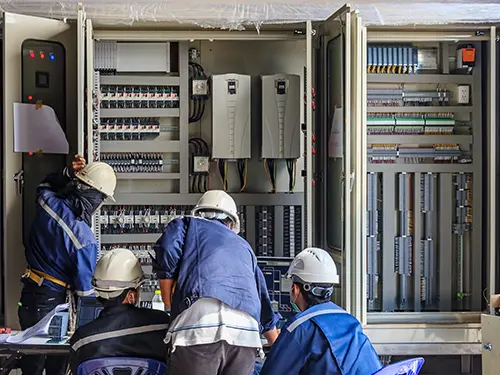

Automated equipment receives regular attention because failures are visible and immediate. Control systems, however, are often expected to keep operating indefinitely until something goes wrong. A failed power supply, a communication issue, a corrupted program, or an aging PLC can prevent equipment from running even when the mechanical systems have been regularly maintained and are in good condition. Control system maintenance helps identify these problems before they interrupt throughput or daily operations.
A maintenance program should address the physical components of the system, as well as the software, documentation, backups, and other resources needed to troubleshoot and restore the system when something goes wrong.
Control System Maintenance Requires a Different Approach
Control systems differ from mechanical assets in that much of their risk is hidden. A motor bearing may show signs of wear long before failure. A PLC processor, power supply, or network switch often works normally until it suddenly does not. Controls are responsible for much of what happens across an automated operation. When a control system problem occurs, the effects can extend beyond a single component.
Some problems develop gradually. Increasing communication errors, intermittent faults, or recurring alarms may be early indications that a component or part of the system needs attention. At the same time, documentation may become outdated as modifications are made or backup procedures may be neglected. None of these conditions causes an immediate shutdown, but together they increase the likelihood that a routine fault becomes a major operational disruption.
Addressing these issues during planned maintenance is much easier than diagnosing them after they cause downtime. Maintaining the control system also requires a different approach from maintaining the equipment it operates. Mechanical components can often be inspected for wear, lubricated, adjusted, or replaced according to established maintenance intervals. Control systems require attention to hardware condition, software, programming, communications, documentation, and the availability of replacement components.
Hardware Components That Require Regular Attention
A control system maintenance program should include the hardware that allows the system to operate and communicate. This includes PLCs and remote I/O, HMIs and operator workstations, industrial network equipment, power supplies, UPS systems, and control panels.
Some of these components may not receive much attention when everything is working properly. That can make them easy to overlook during routine maintenance. While these components often require less routine maintenance than mechanical systems, they should still be inspected periodically. Excessive heat, dust accumulation, moisture exposure, vibration, and loose electrical connections can all contribute to failures.
Field devices should also be considered when they are part of the control system. Sensors, switches, valves, and other devices provide the inputs and outputs that allow a control system to monitor and control equipment, movement, and process conditions. A problem with one of these devices can appear to be a PLC or programming issue if the source of the fault is not identified.
Facilities should also maintain an inventory of critical spare parts. A failed component may be relatively inexpensive, but downtime can become significant if replacement hardware is unavailable. This challenge becomes even greater when older systems rely on equipment that is no longer actively manufactured or supported.
Industrial networks deserve particular attention. Communication failures between controllers, HMIs, drives, and automated equipment can create intermittent issues that are difficult to diagnose. Monitoring network health and addressing communication problems early can prevent larger disruptions later.
The environment around the control equipment should also be considered. Heat, dust, vibration, and moisture can affect electronic components and shorten their useful life. Maintenance activities should include checking whether control panels and other equipment are operating under conditions appropriate for their internal components.
Software, Documentation, and Backup Management
Control system maintenance is not limited to physical equipment. The programs and configuration files that tell the system how to operate are just as important. If a PLC fails and its program is not available, replacing the hardware may not be enough to get the operation running again.
A maintenance program should establish regular backups for PLCs, HMIs, and other relevant control-system software and configuration files. Those backups should be stored where they can be accessed when needed and managed so the maintenance team can identify which version is current.
Version control is particularly important when changes are made to a system. Programs can change during troubleshooting, equipment modifications, or process changes. Without a process for recording those changes, the available backup may no longer represent what is actually running on the equipment.
Documentation should be maintained along with the programs. Electrical drawings, network information, I/O documentation, and other system records can reduce the time required to troubleshoot a problem. When documentation does not reflect the current system, maintenance personnel may have to spend valuable time determining how the system is actually configured before they can begin addressing the problem.
Firmware and software updates should also be managed as part of the maintenance program. Updates can address known issues or support newer hardware, but they can also affect compatibility with existing systems. Changes should therefore be evaluated and documented rather than made without considering the rest of the control system.
Identifying Control System Risks Before Failures Occur
Maintenance is also the right time to assess exposure. The review should determine whether the operation can recover quickly if a controller fails, a program is lost, a network segment becomes unstable, or a critical component can no longer be sourced. Risk identification should account for failure impact, recovery time, and supportability. A low-cost device can become a high-risk part of the system if it controls a high-throughput process, depends on an undocumented configuration, or cannot be restored from a verified backup.
This review should also account for single points of failure. One example is a controller or network device that supports several machines with no tested replacement path. Another is an operator station that contains the only current copy of an HMI project. These conditions may not cause daily problems, but they can slow recovery when a failure occurs.
Recurring faults should be evaluated in the same way. A pattern of resets, communication drops, unexplained equipment stops, or repeated service calls can show where the system is losing reliability. Tracking those patterns helps determine whether the response should be troubleshooting, component replacement, network correction, program cleanup, or planned modernization.
Building a Long-Term Control System Maintenance Strategy
A control system maintenance program should establish what needs to be checked, how often it should be reviewed, and who is responsible for each activity. The schedule may include physical inspections, backups, documentation reviews, software management, and checks of critical components and communications. The program should also identify the systems and components most critical to operations. Not every component presents the same level of risk. Prioritizing critical equipment can help maintenance teams focus their time and resources on areas where a failure would have the greatest impact on uptime or throughput.
Internal maintenance personnel may be able to handle many routine inspections and checks. More complex problems may require controls engineering expertise, particularly when troubleshooting involves PLC programming, industrial networks, system modifications, or older equipment that is becoming difficult to support.
Regular maintenance can also provide useful information for future planning. Tracking recurring failures, obsolete components, difficult-to-source parts, and system limitations gives operators a better basis for deciding when an upgrade or expansion is warranted. A control system maintenance program helps teams understand the condition of the systems that keep automated operations running and gives them an opportunity to address problems while they are still manageable.
How Kasa Controls Supports Control System Maintenance
A maintenance program can identify control system problems, but the findings often need engineering follow-through before the risk is reduced. An outdated operator interface, an unsupported controller, or an unstable network can point to a larger issue in the control architecture. In those cases, the system needs to be evaluated and corrected so that operations are not dependent on fragile controls.
Kasa Controls provides controls engineering services for companies that rely on automated equipment. We work with systems used in manufacturing, baggage handling, parcel movement, grain operations, and other industrial environments where downtime affects throughput. We help maintenance and operations teams determine whether a problem is isolated to one device or tied to the way the system is programmed, maintained, or connected to the rest of the operation.
Our work is most useful when maintenance findings cross over into engineering decisions. A facility may know that an interface is outdated or that a network fault keeps returning, but still need help deciding what to do next. We can help compare repair, migration, and redesign options against uptime risk, recovery time, hardware availability, and software compatibility.
For older systems or changing operational needs, we can connect maintenance planning with larger automation projects. That may mean a controls upgrade, machine integration, panel design, programming support, or commissioning tied to a larger project. The result is a maintenance program that does more than keep the current system running. It gives the operation a clearer path for improving reliability and planning control system changes before a failure forces the decision.